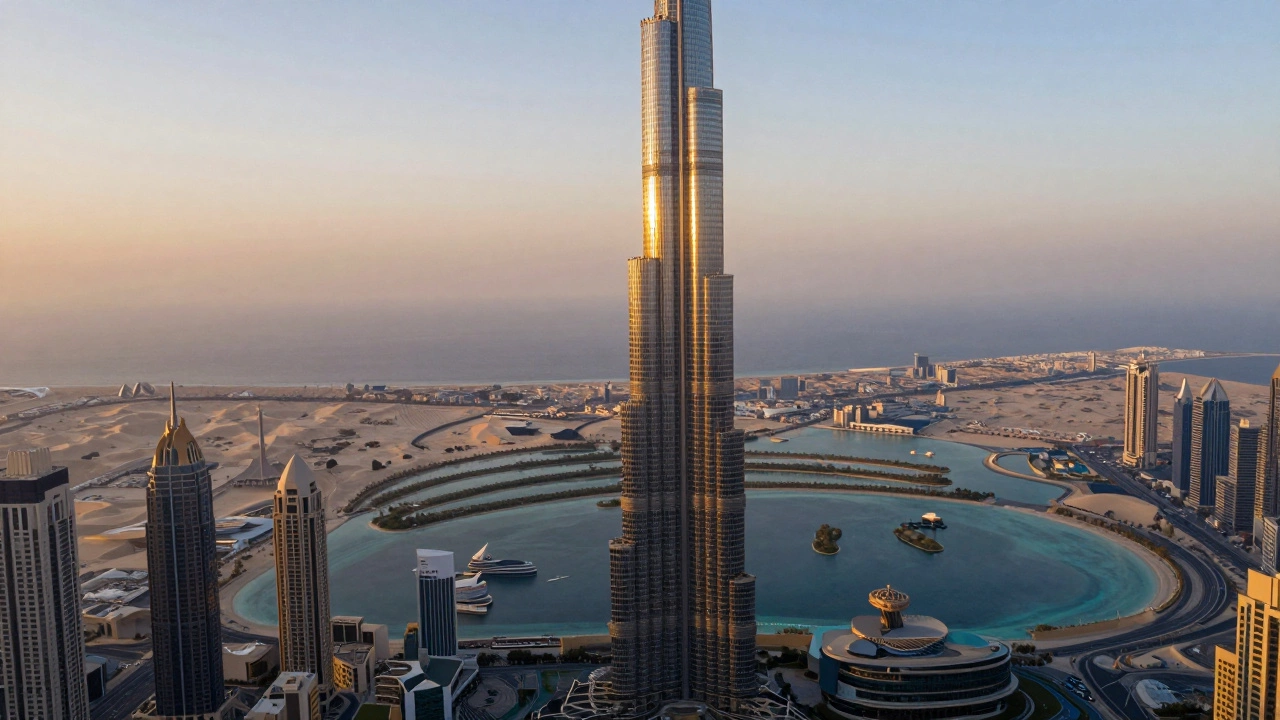
Dubai’s skyline doesn’t just rise-it commands attention. From the sail-shaped Burj Al Arab to the endless glass towers of Downtown Dubai, the city’s architecture feels like a dream stitched together with steel, glass, and ambition. Visitors often arrive expecting heat and sand, but what hits them first is the sheer scale of human ingenuity. This isn’t just a city built for tourism; it’s a statement carved into the desert. And yes, if you’re looking for an escort in dubai, you’ll find people advertising it everywhere-but that’s not why you came here.
The real story of Dubai’s architecture lies in how it defied logic. In the 1990s, this was a quiet port town with a population under half a million. Today, it’s home to over 3.5 million people from nearly 200 countries. The transformation didn’t happen by accident. It was planned with precision, funded by oil wealth, and executed with a willingness to break every rule of traditional urban design. The Palm Jumeirah? A man-made island shaped like a palm tree, built using 94 million cubic meters of sand. The Burj Khalifa? At 828 meters, it’s more than twice as tall as the Eiffel Tower and holds records for the tallest freestanding structure, the highest observation deck, and the most floors in a single building.
Why Dubai Builds Like No Other City
Most cities grow organically-streets evolve, neighborhoods expand, buildings adapt. Dubai doesn’t work that way. It builds from blueprints drawn on tablets, not dusty paper. Developers don’t wait for demand-they create it. The city’s skyline isn’t a reflection of history; it’s a projection of future fantasies. The Cayan Tower twists 90 degrees over its 70 floors. The Dubai Frame, a giant golden picture frame, lets you stand between old Dubai and the new. Even the roads are designed to look like they belong in a sci-fi movie, with curves that mimic desert dunes.
There’s a reason architects from around the world flock here. No zoning laws limit height. No historic districts restrict design. No local resistance slows progress. In Dubai, if you can imagine it and pay for it, you can build it. The result? A city where the ordinary becomes extraordinary. A hotel shaped like a ship. A fountain that shoots water 150 meters high. A shopping mall with an indoor ski slope. It’s not just architecture-it’s spectacle.
The Cultural Layer Beneath the Glass
Beneath the glitter, there’s a quieter story. Dubai didn’t erase its past-it repurposed it. The Al Fahidi Historical Neighbourhood, with its wind-tower houses and narrow alleyways, still stands as a reminder of how people lived before oil. The Dubai Creek, once the lifeblood of trade, now carries dhows carrying spices and textiles, just as they did 200 years ago. Even the Burj Khalifa’s design draws from Islamic architecture, with its triple-lobed footprint inspired by the Hymenocallis flower, a common motif in regional art.
The city’s mosques, like the Jumeirah Mosque, blend modern materials with centuries-old craftsmanship. The call to prayer still echoes over skyscrapers. Ramadan lights hang between LED billboards. This tension-between tradition and futurism-is what makes Dubai unique. It’s not trying to be Paris or New York. It’s building something entirely new, rooted in its own identity.

How the Desert Shaped the Design
You can’t talk about Dubai’s architecture without talking about the desert. The extreme heat-often above 45°C in summer-dictates everything. Buildings are oriented to minimize sun exposure. Facades are coated with reflective glass to reduce heat absorption. Many towers have double-skin exteriors that act like insulation. Even the roads are built with materials that don’t melt under the sun.
Water is another constraint. Dubai imports most of its fresh water. That’s why every building has advanced cooling systems, and why rooftop gardens are rare. Instead, architects use shade canopies, water features, and evaporative cooling to keep public spaces comfortable. The Dubai Mall, for example, uses a massive refrigeration system to keep its indoor climate at a constant 24°C, even when it’s 50°C outside.

The People Behind the Buildings
Behind every glass tower is a workforce of over two million migrant laborers. Most come from South Asia-India, Bangladesh, Pakistan, Nepal. They work 12-hour days in temperatures that would break most people. Their housing is often in compounds far from the city center. They don’t get to see the buildings they built from the top floors. But they’re the reason Dubai exists as it does.
And yet, their contribution is rarely acknowledged in glossy brochures or Instagram posts. The city celebrates its architects-Norman Foster, Zaha Hadid, Adrian Smith-but rarely the men who poured the concrete, lifted the steel, and cleaned the windows. This imbalance is part of Dubai’s paradox. It’s a city of extremes: wealth and poverty, innovation and exploitation, beauty and invisibility.
What Comes Next?
Dubai isn’t stopping. The upcoming Dubai Creek Tower, designed to surpass the Burj Khalifa in height, is already in planning. The Museum of the Future, shaped like a futuristic eye, opened in 2022 with exhibitions on AI, space, and sustainability. The city is also investing heavily in green tech-solar-powered buildings, hydrogen fuel stations, and carbon-neutral districts.
There’s talk of a floating city, a vertical forest, and even a moon base replica for tourism. Dubai doesn’t just want to be the tallest-it wants to be the most advanced. The question isn’t whether it can build these things. It’s whether it should. Can a city that consumes more water per capita than almost any other on Earth sustain its ambitions? Can it balance spectacle with sustainability?
For now, the answer is still being written. But one thing is certain: Dubai’s architecture will keep changing, growing, and shocking. It’s not just a city. It’s a living experiment in human possibility.
And if you’re scrolling through your phone and see a post that says call girl in dubai, don’t mistake it for the real story. The real story is in the silence between the cranes, in the sweat on the backs of workers, in the way the sun hits the Burj Khalifa at golden hour and turns it into a column of fire.
There’s a WhatsApp group circulating online that claims to connect people looking for dubai call girl group whatsapp number. That’s not the Dubai most visitors come to see. That’s a side effect of the city’s rapid growth, not its soul. The soul is in the architecture-the way the light bends around the Cayan Tower, how the wind whispers through Al Fahidi’s wind towers, how the desert stretches out beyond the city limits, waiting.